
Agriculture

The Truth About “The Sugar Farmer Bankruptcy Act”

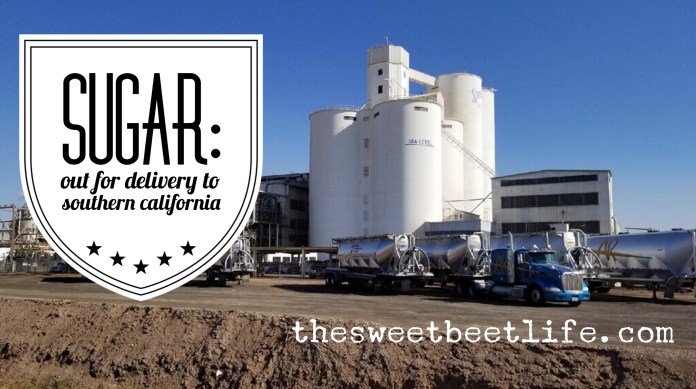
Truckloads of #ImperialValley #Spreckels #sugar are rolling out for delivery to our Southern California bakery and confectionery customers. After processing, the sugar is stored at this facility at no charge to the customer until they are ready to order the specific form of sugar that they request to be delivered to them — and at the same price they paid in the 1980’s.

Because of the nature of the process, delivery of our product to the customer is not immediate; however farmers do have immediate payroll and operating expenses. So, the primarily grower cooperative-owned processors store sugar at their facilities and take out short-term government loans which are repaid WITH INTEREST, in order to pay farmers for their crop in a timely manner.

I have just described U.S. sugar policy – it works for farmers, for our customers and for the taxpayer. It supports 142,000 American jobs in 22 states. It allows the American grocery shopper to pay lower prices for sugar than the global average. It has also helped the domestic candy and confectionery production grow their revenues to the tune of 131% over the last 15 years. In other words, “if it ain’t broke, don’t fix it”.

Why in the world, then, have the candy and confectionery companies mounted a campaign to dismantle sugar policy in the #2018FarmBill? It’s pretty obvious – 1980’s prices aren’t low enough, and they’re willing to mislead Members of Congress and the American public, as well as take down an entire industry in the interest of their bottom line.

Proponents of the “Sugar Policy Modernization Act” would have you think it’s a wonderful kumbaya-type “fair” reform to an outdated policy from which all parties benefit. This is just one of many patently false claims.

No, their industry is not at risk of losing jobs due to expensive sugar – see above. U.S. grocery store prices are lower than the developed country average. No, American sugarbeet and sugar cane growers do not receive government subsidies. No, the current sugar policy does not cost taxpayers a dime. In 2013, Mexico violated U.S. trade laws by illegally dumping subsidized sugar on our market – the USDA acted in order to keep the market from collapsing. No, sugar farmers cannot operate under their proposed “reform”. Period.

The misleading articles and false statements from those who back the “Sugar Farmer Bankruptcy Act”, as I prefer to call it, are just a smoke screen to obscure the real end game: to allow foreign government-subsidized sugar to flood our market. We simply cannot compete with the treasuries of foreign governments, and the American sugar industry would go away. Consider it the outsourcing of 142,000 American jobs.

I hope that #Congress listens to farmers who best know how #Farm Bill policy affects our family farms. Please stand with the American Farmer to defeat this devastating amendment so that we may continue to see trucks full of American-grown sugar on the road, out for delivery.
Standard
Agriculture

My Two Cents to Congress: Sugar Policy “Modernization” Will “Reform” Farmers Right Out of Business

An Open Letter to Congress:

In recent weeks, I have noticed that proponents of the “Sugar Policy Modernization Act”, a bill introduced in both the House and Senate, like to imply that sugar farmers will benefit from it. It is likely to be introduced as an amendment to the Farm Bill, and supporters – candy makers, bakers and other food manufacturers as well as ideological groups from both the right and the left – are trying to imply that sugar growers are in some way in “alliance” with their point of view.

Nothing could be further from the truth and it’s time for this grower to add her two cents.

Let’s begin with some facts. Sugarbeets are grown by 10,000  family farmers in 11 states and 1,000 farmers grow sugar cane in three states. Two million acres of sugarbeets and sugar cane are planted in the U.S., roughly 50% of each. These acres represent 142,000 American jobs and generate $20 billion into our economy. One hundred percent of sugarbeet processing factories are farmer-owned, and 90% of sugarcane refining is owned by farmers or employees; these are not evil “mega-processors” or “cartels” as you may have heard – just family farmers trying to make a living.

Next, some myth-busting. Sugar farmers do not receive “subsidies”. We are different from a seller at a farmer’s market, for example, who harvests their crop and hands it over immediately and directly to a buyer. After harvest, sugar is processed and stored at the cooperatives’ facilities (at no cost to the user) until orders are placed and the sugar is shipped  – on time, at the customer’s specifications. This system works because many of our users buy in bulk but don’t need it all at once. They have no way to store that much product.

In the meantime until that stored sugar is sold, farmers and processors have bills to pay. The processors take out short-term loans from the government that are repaid with interest within nine months. This allows the processor to pay the grower for his crop in a timely manner. However, under the proposed legislation and without the current safety net that sugar policy provides, processors would lose access to these vital loans and it would be difficult for farmers to secure their operating loans.  Proponents say that this bill “will not put any sugar farmers out of business.” Farmers know better. It would be devastating.

Another myth refers to a “hidden tax”. There is no hidden tax. Current sugar policy has operated at no cost to the taxpayer since 2003, with the exception of one year, in 2013,when Mexico violated U.S. trade law and dumped subsidized sugar on our market. This was a trade issue which subsequent agreements have addressed, and the USDA projects that the current policy will continue to operate at no cost for years to come.  Mexico is just one of 120 countries that subsidize their sugar growers in some way (the United States does not.)

Contrary to the spin you may see, here are some facts about the price of sugar. American shoppers pay 22% less for sugar than shoppers in the rest of the developed countries do, and U.S. food manufacturers pay 25% less for sugar than their counterparts in other developed countries. U.S. sugar prices are not “artificially inflated, but in fact have fallen 44% since 1985 when corrected for inflation. So it’s certainly understandable that Official Census data shows that candy production in the U.S. has grown and expanded under the current sugar policy.

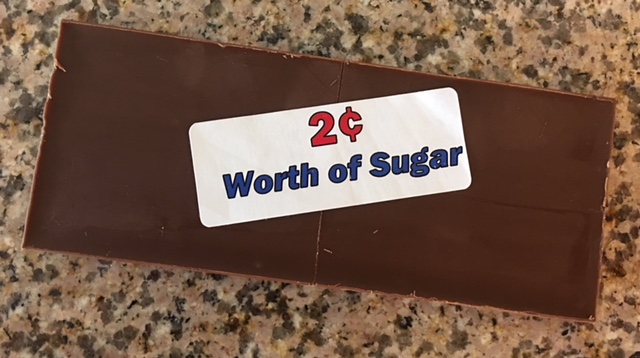
Perhaps the most striking fact about the price of sugar has to do with a simple candy bar, let’s say a 1.55 oz. milk chocolate one. In the 1980’s, that size candy bar cost about 30 cents, and there was two cents worth of sugar in it. Today, you’d pay $1.50 for that same candy bar that has……two cents worth of sugar in it. The increased cost of a candy bar (or a cake or cookies for that matter) to the consumer is obviously not due to the so-called “inflated” price of sugar.

IMG_7990

The Sugar Policy Modernization Act might be more aptly called the Sugar Farmer Bankruptcy Act. American sugar cane and sugarbeet growers simply ask Congress to leave current sugar policy alone in the next Farm Bill.  It does not need “modernization” because it has historically worked for us, at no cost to the taxpayer. It has allowed us to provide a high-quality and essential food product as well as thousands of U. S. jobs in predominantly rural areas. We feel we are the best ones to speak about what our industry needs, and we know that a sugar policy that claims to be “reformed” would instead be devastating.

There you have it, my two cents.  Please don’t cut us out of the Farm Bill.


Suzanne Rutherford

Brawley, CA

Sugarbeet grower


Standard