When I tell you I’m from California, your mind’s eye probably envisions the iconic images of Hollywood, Disneyland and the Golden Gate Bridge; however, in reality we’re just regular folks who work hard, raise healthy children and try to make a better future for our families. California is a large state with an extremely diverse population with one thing in common: we all need to eat! As a farmer who also spends time grocery-shopping and on social media, I realize that many people are confused or misinformed about what is in our food. I’d like to provide some answers about one of them: sugar.
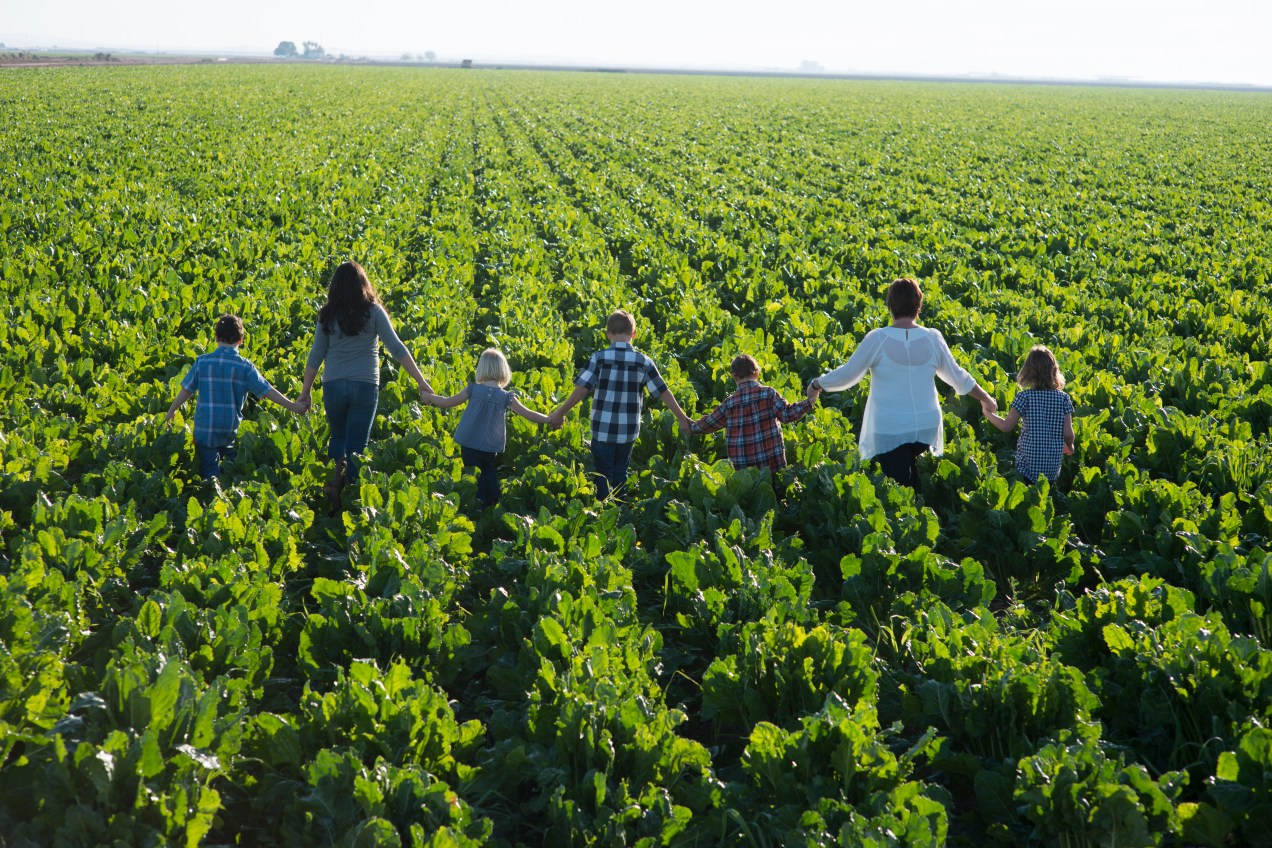
I’m Suzanne Rutherford, a native of the Imperial Valley town of Brawley, California in the southeastern corner of the state. My husband, Curt, and I have one son and two daughters, who along with their terrific spouses have given us eight delightful grandchildren. In our family farming business, we grow sugar beets as well as durum wheat, Bermuda grass and alfalfa on land that was transformed from raw desert into fertile farmground in the early 1900’s, using water delivered by an extensive canal system from the Colorado River some seventy miles away.
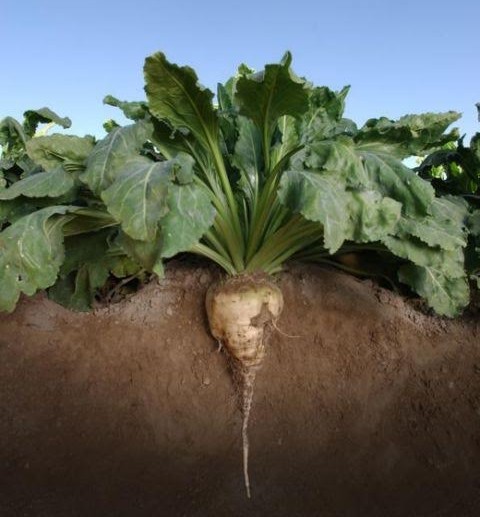
Statewide, a diverse agriculture industry generates $46.4 billion for California’s economy through the production of over 400 commodities. One of those crops, sugar beets, have been grown in California for over 145 years, with the first successful commercial processing facility being built in Alvarado (now known as Union City) in 1870. In the early 1980’s, there were nine sugar beet processing factories in California. Today, there is just one – the Spreckels Sugar factory in Brawley. On average, the 25,000 acres of sugar beets grown in the Imperial Valley produce 1,100,000 tons of beets, which translates to 3 million pounds of sugar; in other words, California sugar beet growers produce enough sugar to supply San Diego, Los Angeles, San Jose and a portion of San Francisco, earning them the title of highest yielding per-acre producers in the world.
While achieving the highest possible per-acre yield of a quality crop which meets consumer demand is every farmer’s goal, feeding high quality, healthy food to their family while staying within budget is every mom’s (and grandmother’s!) goal. I happen to overlap into both categories, and I am confident that the sugar we produce is safe for my family to eat – and it’s grown from seed developed through the latest in breeding techniques, including genetic modification.
Let’s talk about some of the common misconceptions as well as some science-based facts about genetically modified organisms, or GMO’s. Selective breeding of plants and animals has been used for thousands of years, meaning that virtually everything we have ever eaten has been genetically modified. Kale, broccoli and cauliflower are all top choices for healthy eating these days, and all exist due to selective breeding of the wild mustard plant – they are all GMO’s. The corn that my seventh great-grandfather grew in Maryland in the late 1600’s would pale in comparison to the lush, full corn kernels of today because over the centuries, farmers developed better varieties in order to increase yield. If you own a dog, it is most likely a GMO – animals were bred for specific desirable traits.
Many items we use and consume in our everyday life are genetically modified, and so it’s reassuring that groups such as the American Medical Association, The National Academies and the European Commission and the Center for Science in the Public Interest have found there to be no evidence at all that genetically engineered foods pose any risk to humans. Other widely respected groups who are supporters of genetic engineering are the United Nations Food and Agriculture Organization, the World Health Organization, the International Academies of Sciences and the Royal Society of Medicine. With respect to sugar specifically, in worldwide testing of 44 international samples of white cane sugar, white beet sugar, raw sugar and organic cane sugar, along with multiple tests at all 23 North American factories, it was concluded that sugar is the same regardless of the source. Furthermore, no DNA or biotech protein was found in samples from biotech sugar beets, nor was there Roundup residue found in sugar made from Roundup Ready sugar beets. After looking at the evidence, I trust the conclusion of these esteemed scientists – GMO’s are safe for my family.
From our perspective as farmers, using genetically modified sugar beet seed lowers our production costs and benefits the environment; because of the Roundup effectiveness, we use less hand labor to weed the rows and less herbicide overall and the drought resistant trait uses less water more efficiently. These plants also use fertilizer more efficiently, therefore reducing the use of chemicals and the fuel to apply them. When the benefits of using this technology are multiplied worldwide, it creates a positive effect and a win-win for farmers and the environment.
Over the years, it has always been a priority to make sure my family makes healthy food choices, just like moms in San Francisco or Orange County. We are all exposed to the same advertising and publicity about the latest trends in food and nutrition, and as the primary shoppers, women are responsible for making the food choices for their families. After doing some research, I trust the elite scientific community’s assurance that GMO’s are safe for my grandkids to eat, and safe for us to grow as a food product to be eaten by everyone else’s grandkids as well. Now that I know the truth about GMO’s, I have one less thing to worry about as I navigate the grocery store aisles.
 thesweetbeetlife.com